
Front-of-House Talent
Event Servers for Hire, Vetted for the Private Host
HELM curates event servers for hire for private dinners, cocktail receptions, weddings, and the occasions in between. Every server is vetted for fine-dining-caliber poise before they ever reach your door, and the bench grows by referral and audition rather than open enrollment. Where a private chef commands the kitchen, your waitstaff command the room—the timing, choreography, and quiet detail that let you remain a guest at your own gathering.

Services
How this role can support an occasion
Plated and family-style dinner service
Cocktail and reception support
Table setting, clearing, and reset
Coordination with chefs and event leads
What Does an Event Server Do at a Private Party?
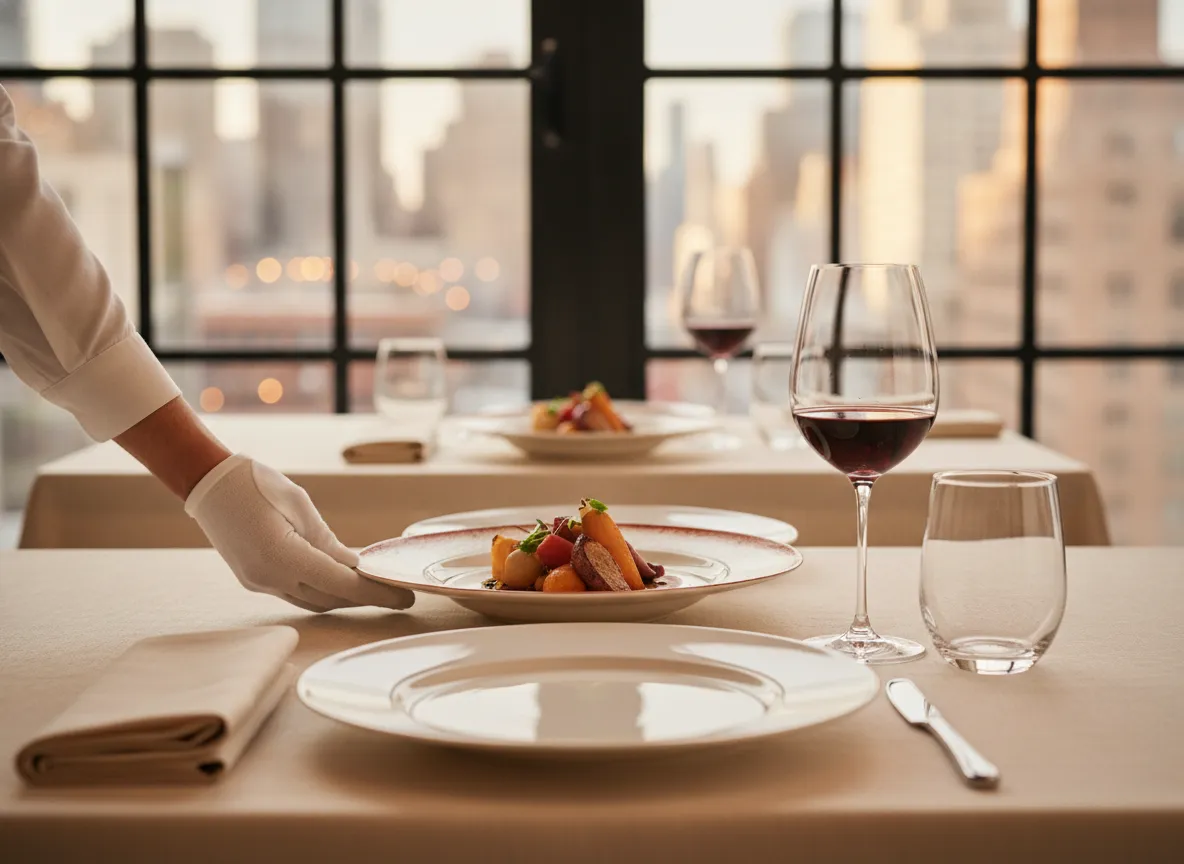
An event server owns the front of house so that you do not have to. Before guests arrive, they confirm place settings, stage glassware and service stations, and walk the evening's timing with whoever leads the kitchen. Through service they pour, present, and clear in quiet rotation—plated courses landing together, canapés circulating before glasses run empty, water refreshed without a word being said. When the final course clears, they reset the room: dishes cleaned or packed, rentals boxed, the kitchen returned to the condition in which it was found. Setup and breakdown are part of the work, not an upgrade to it. The measure of good waitstaff is how little you notice them—an evening you attend as a guest rather than administer as staff.
Service Styles, Set to the Occasion
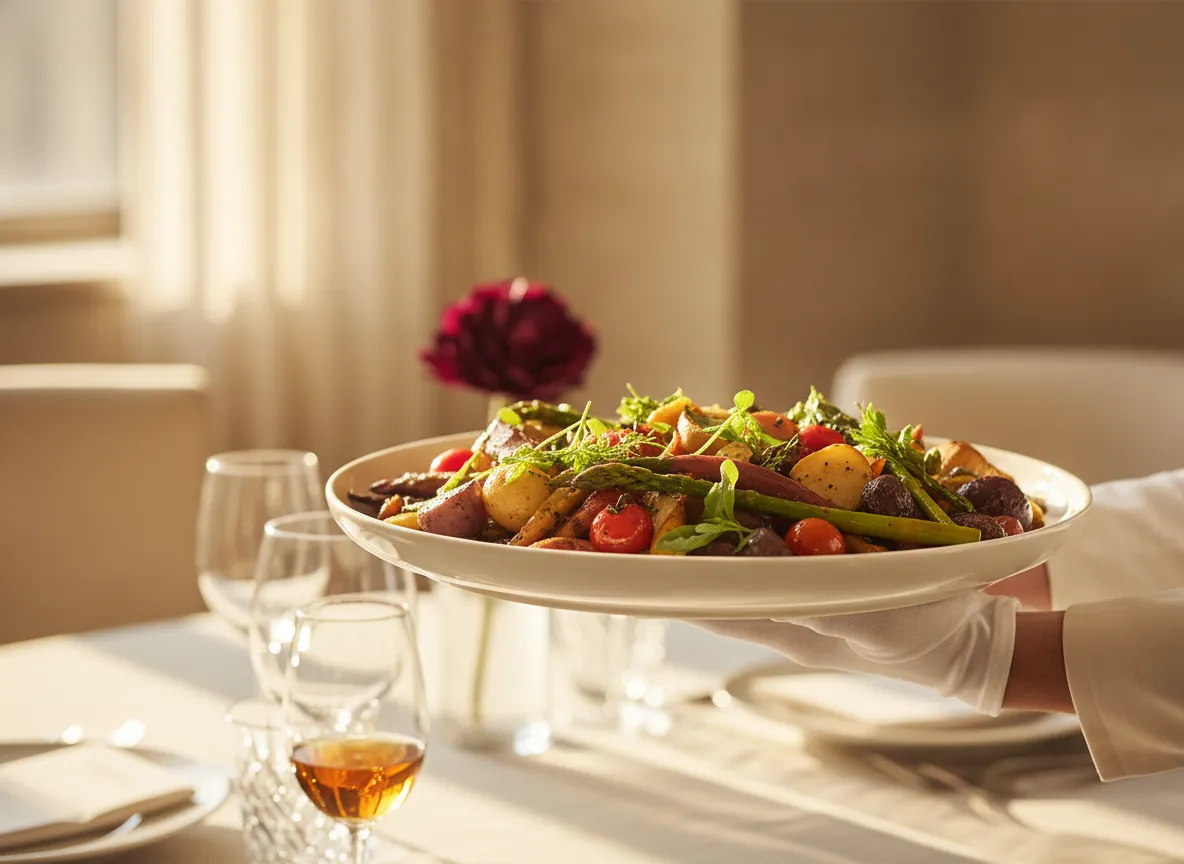
A private home is not a banquet hall, and the service standard differs accordingly. HELM waitstaff work across the formats a private host actually uses, and the white-glove standard is the default rather than a tier. A plated dinner calls for synchronized service—courses set down together, cleared together, wine following each place in turn. Family-style asks for heavier platters, tighter resets, and an easy grace around conversation. Passed canapés at a cocktail party demand circulation instincts—reading the room, retiring trays before they thin, keeping the floor moving. Whatever the format, presentation is uniform in the literal sense: polished black-and-white or attire matched to your occasion, arrived pressed, on time, and briefed. If you are shaping the larger evening, our guide to hosting a luxury private event at home covers sequencing, rentals, and flow in detail.
How Many Servers Do You Need?
Staffing count is the question hosts ask first, and the honest answer depends on service style more than headcount alone. These are the ratios HELM plans against; HELM confirms a recommended count once menu, format, and floor plan are settled. For 50 guests, that typically means four to five servers for a plated dinner and two to three for a cocktail reception. When in doubt, round up by one—the difference is felt in pacing all evening.
- Plated dinners: one server per 10 to 12 guests, adding a lead server or captain once the table passes 30
- Family-style: one server per 10 guests—platters, passing, and resets ask for more hands than plated service
- Buffets and stations: one server per 15 to 20 guests to tend lines, clear, and reset
- Cocktail receptions with passed canapés: one server per 20 to 25 guests, more when the menu passes heavily
- Intimate dinners at home: a single server comfortably runs a table of 10 to 12 alongside your chef
Completing the Chef-Led Evening
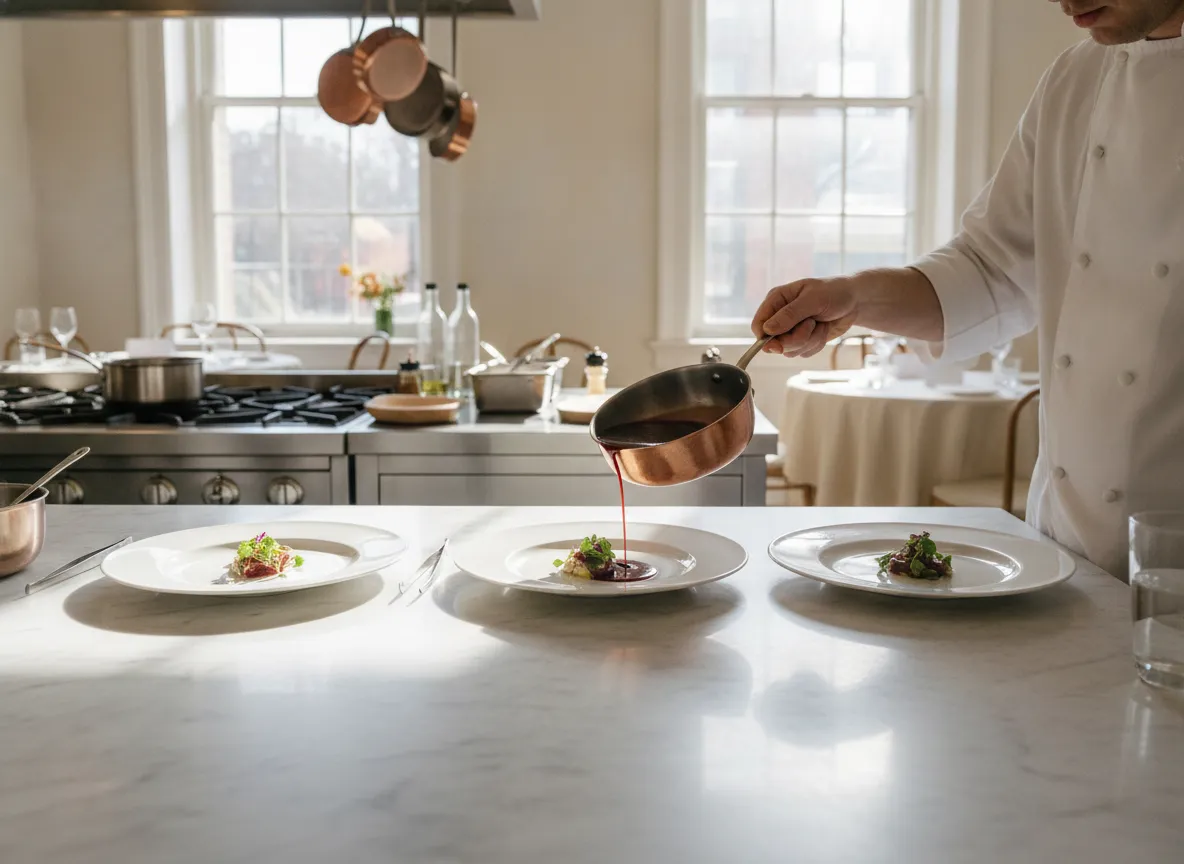
Search patterns say hosts book servers and bartenders together, and they are right to. A chef-led dinner reaches its full expression when someone else is timing the floor: the private chefs on HELM's roster plate to the second, and waitstaff make certain each course arrives at that second. Add bartenders for a proper welcome hour, or a sommelier when the cellar deserves narration, and the evening becomes an ensemble rather than a relay. Our editorial on building a full-service team around your chef maps who does what, and when each role earns its place. Every professional arrives under the same standard of vetting and discretion, booked through a single request rather than four separate vendors.
Vetted Before They Reach Your Door
HELM's server roster is newer than our chef bench, and we are keeping it that way on purpose—growth by referral and audition rather than open enrollment. Every candidate passes the same review behind how HELM vets its talent across the platform: reference checks with the rooms they have served, an interview that measures poise as much as experience, and confirmation of current food-handler certification. We look for backgrounds in fine dining rooms, private clubs, and estate service, because a private home is the most demanding room there is—no expediter, no service kitchen, no second chance at a first impression. We would rather decline a date than staff it below that standard, and we say so here because you will feel the difference at the table.
For Planners, Venues, and Caterers
Most of this page speaks to the private host, but banquet servers for hire is a request we welcome from the trade as well. Planners, caterers, production companies, venues, and estate and household managers book front-of-house staff on a client's behalf, and they book against a different set of concerns. Not inspiration, but certainty: a gala's plated service, a brand dinner, a wedding weekend that outgrew the in-house team, a residence hosting forty on short notice. The format varies and the requirement does not—staff who arrive when they said they would, dressed as specified, briefed, and able to hold a floor without being managed. So we work from your specifications rather than ours. Every server presented to you has passed the same review described above, and where a venue or a client needs those credentials on file, we confirm them in writing rather than ask anyone to take them on faith. Discretion is part of the placement rather than an addendum to it: a server working a private residence or a client's brand dinner treats the house, the guest list, and anything said inside it as confidential, and will sign to that effect when your client asks. Where one event calls for several roles—waitstaff alongside a chef, bartenders, a sommelier—it remains one request and one point of contact rather than four vendors working from four timelines. The briefs we can move on fastest tell us:
- Date, venue or address, load-in and call time, and the hour you expect to wrap
- Guest count, service style, and the course or pass schedule you are running
- Uniform standard, including any presentation requirements particular to your client
- Captain structure—whether you need a lead server on the floor or your own captain runs it
- Additional roles to cover: a chef, bartenders, a sommelier, or luxury concierges for guest-facing hospitality
- Any certification or documentation your venue or client requires in advance
Staffing a Season, Not a Single Date
Trade calendars are rarely one evening. A venue with a spring wedding season, a caterer with eleven dates in December, a production company shooting three days in one house—these are staffing problems with a shape, and a shape is easier to solve early than repeatedly. So send the calendar rather than the date. Servers are presented by name, which means a planner who liked how someone ran a floor in April can ask for that server in June, and a venue can assemble a familiar core team that already knows its kitchen, its floor plan, and the pace of its service. Familiarity is the closest thing to a shortcut this work allows—the second event with the same people always runs quieter than the first. If your team works from call sheets, send yours rather than completing a second document—HELM briefs staff from your paperwork, and a lead server confirms receipt of it before the call time. On timing, plainly: two to four weeks is comfortable for most dates, and six or more for holiday weeks, summer weekends, and wedding season, when polished waitstaff are committed earliest. Shorter notice is often workable, and we will tell you at the enquiry rather than the week of when it is not. Each date is scoped on its own terms—call time, service style, headcount, travel—so a standing calendar stays as legible as a single booking. To begin, start a staffing request with your dates, guest counts, and service styles, or explore available talent across every HELM category. HELM confirms fit, availability, and a recommended staffing plan before anything is booked. Servers are presented by name, so a planner who liked how someone ran a floor in April can request that server in June, and a venue can build a familiar core team as the bench grows. The server bench is newer than our chef bench, so we will tell you at the enquiry which dates in a season we can hold and which we cannot.
Questions
Common questions
What does an event server handle?
Scope varies by engagement, but event servers can support setup, guest service, course pacing, clearing, and reset. Your request should describe the venue, guest count, menu format, and any coordination expected with chefs or planners.